
Feature
Matterwave Ventures Invests in TUSK IC to Scale the Technologies Behind Next-Generation Satellite Connectivity
Silviu Apostu
The Belgian semiconductor company is bringing the economics and scalability of standard CMOS to high-performance Ka-band satellite terminals.
September 17, 2026
Category
Portfolio
Published
September 17, 2026
Matterwave Ventures is investing alongside FORWARD.one and the Flanders Future Tech Fund, managed by PMV, with participation from the Schaubroeck family and continued support from TUSK IC’s existing investors.
Together with a recently awarded contract from the European Space Agency, supported by BELSPO, the financing brings TUSK IC’s total new funding to €15 million. The funding will support the company as it accelerates the commercialization of its semiconductor platform and moves from prototype chips towards high-volume production.
The bottleneck on the ground
The expansion of low and medium Earth orbit satellite networks is creating demand for a new generation of electronically steered flat-panel antennas. These antennas are essential for connecting users on the ground to satellites in orbit.
At the heart of these systems are beamformer ICs. They control the signals across the antenna elements and allow the antenna beam to be directed electronically.
TUSK IC is developing what the company describes as the world’s first standard CMOS-based beamformer ICs for Ka-band satellite communications. Its technology is designed to provide a lower-cost and lower-power alternative to the SiGe and specialty CMOS technologies used in satellite user terminals today.
By building its beamformers using mainstream CMOS technology, TUSK IC aims to combine leading-edge mmWave performance with the cost structure, manufacturing scale, and supply-chain advantages of an established semiconductor process.
This matters because the future of satellite connectivity will not be determined by the constellations alone. It will also depend on whether manufacturers can produce reliable, energy-efficient user terminals at a price and volume that support broader deployment.
As our Partner colleague Silviu Apostu explains:
“The future of connectivity will be determined not only by the constellations in orbit, but also by the technologies that make high-performance user terminals scalable and affordable on the ground. TUSK IC combines leading-edge mmWave innovation with the economics and scalability of standard CMOS, addressing a critical bottleneck in satellite communications. We believe this positions the company to underpin a more diverse and resilient space-based communications infrastructure.”
From individual chips to an integrated platform
TUSK IC’s ConnectKa portfolio includes beamformer ICs, antenna modules, and development platforms for electronically steerable flat-panel antennas serving LEO and MEO satellite networks.
The company’s modular system-level approach is intended to reduce design complexity and help antenna manufacturers shorten development cycles. Its chips are designed for high-yield volume manufacturing, low power consumption, and demanding operating environments.
TUSK IC is already working with a leading satellite communications manufacturer to integrate its technology into a new electronically steered array antenna.
Earlier this year, the company also secured a contract from the European Space Agency under the Industrial Competitiveness line of ESA’s Advanced Research in Telecommunications Systems programme.
The company’s target applications range from consumer and enterprise terminals to connectivity on aircraft, high-speed trains, and ships, as well as government and defence use cases.
Deep semiconductor expertise from Leuven
TUSK IC is a spin-out of KU Leuven’s MICAS research group and was initially backed by the Gemma Frisius Fund and KU Leuven Research and Development.
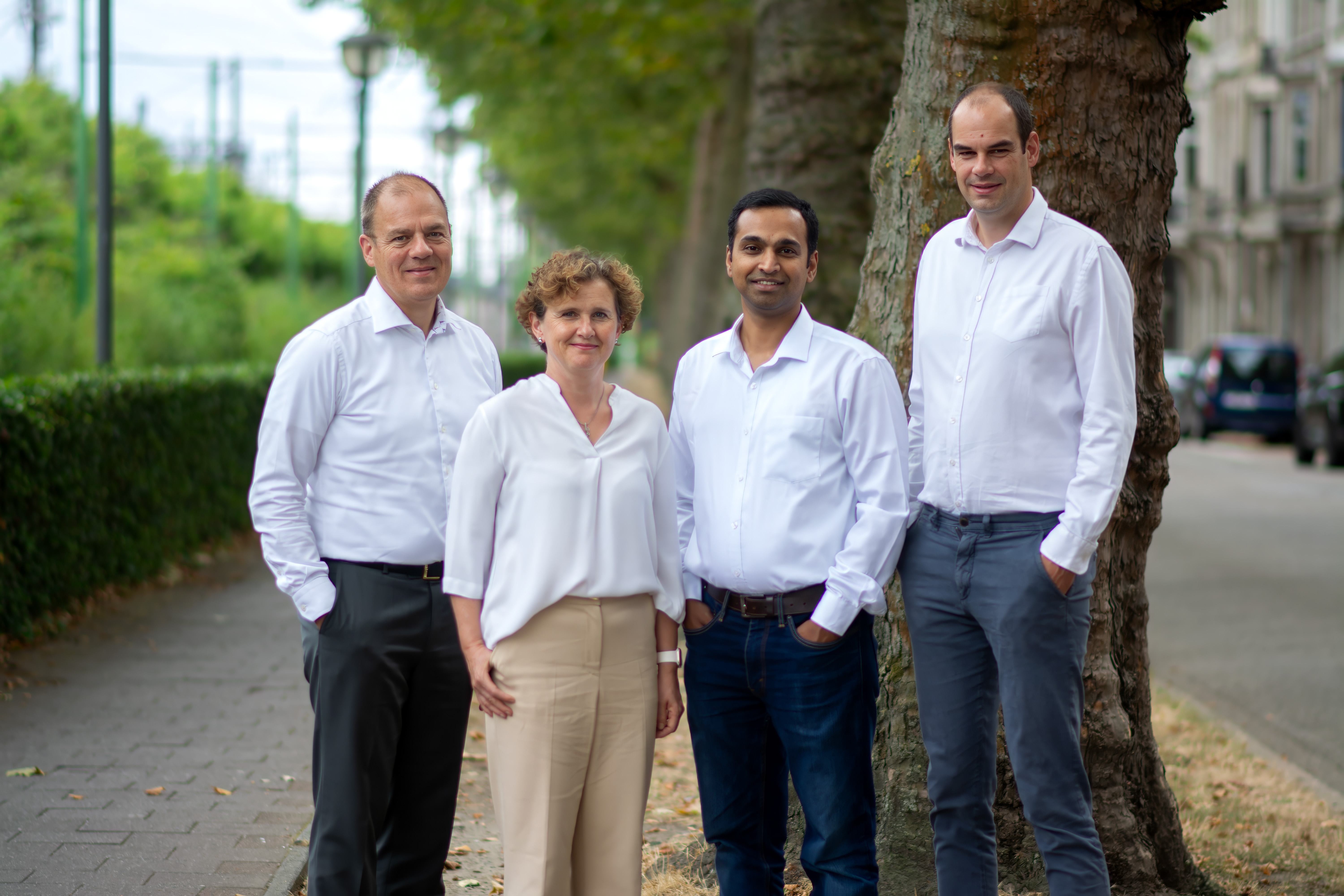
The company is led by CEO Kathleen Philips, co-founder and CTO Shailesh Kulkarni, co-founder and COO Wouter Volkaerts, and VP Business Development Paul Muller. The team combines experience across semiconductor design, automotive and industrial applications, and satellite communications.
For Matterwave, TUSK IC represents the kind of foundational industrial technology we seek to back: deep engineering that addresses a concrete constraint in a growing infrastructure market.
We look forward to working with the TUSK IC team and our co-investors as the company industrializes its technology and brings its platform to customers worldwide.
Learn more about TUSK IC and its semiconductor platform.